Rosette Nebula — NGC 2237
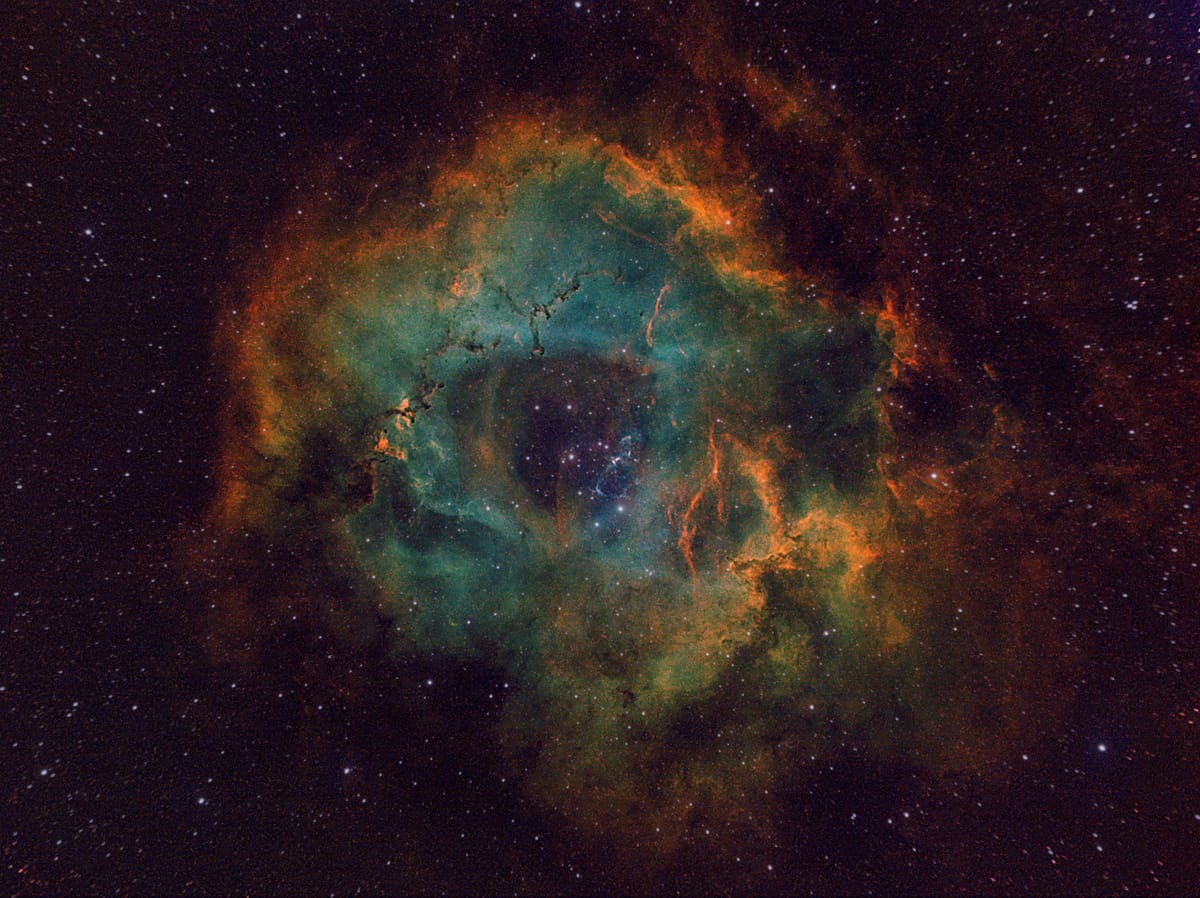
The Rosette Nebula is a stellar nursery — a region where new stars are being born from collapsing clouds of hydrogen gas. The cluster of young, hot stars at the centre (NGC 2244) is blowing a cavity in the surrounding gas with their radiation, sculpting the nebula from the inside out.
This was weeks of integration, dodging spring storms on the west coast. SHO narrowband processed in the Hubble palette — the same color mapping used by the Hubble Space Telescope to reveal the chemical composition of nebulae. Sulfur glows red, hydrogen green, oxygen blue.
The result is one of the most rewarding objects in the sky to image. The central cavity, the dense pillars of gas resisting the stellar wind, the intricate filaments at the edges — it's all structure created by the interplay between radiation and gravity.
Technical Details
- Object: NGC 2237 — Rosette Nebula
- Distance: ~5,200 light-years
- Telescope: 80mm refractor @ 600mm FL
- Filters: SHO narrowband
- Processing: Hubble palette
- Integration: Multiple weeks, dodging spring storms
- Location: Victoria, BC